Onboard
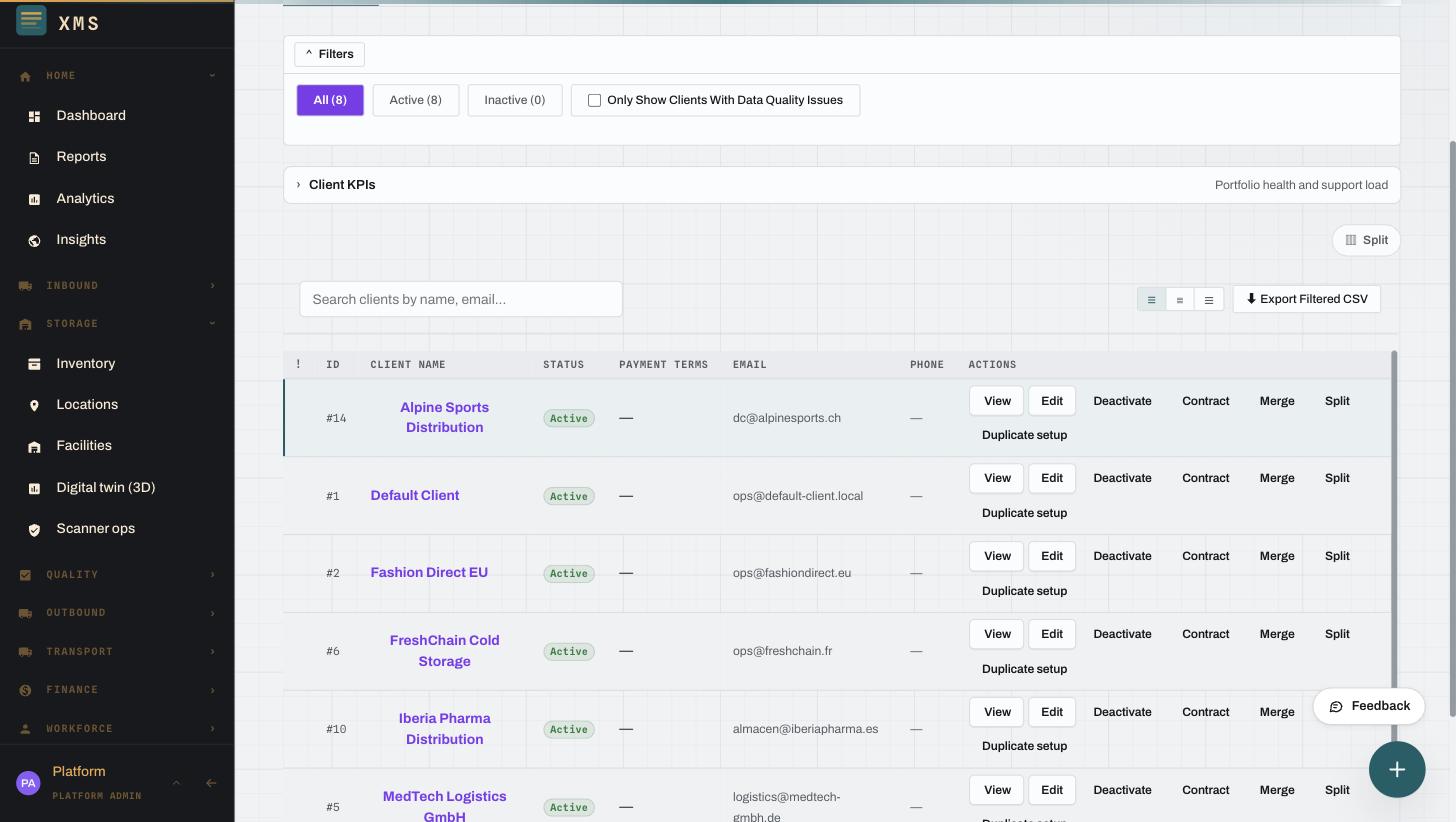
Configure the client, sites, modules, service plan, channels, rate cards, users, and portal access.
Full-service 3PL
Manage client operations, inventory, fulfilment, shipping, exceptions, and billing from one controlled platform while every client's data and commercial context remain scoped.
The 3PL operating thread
The client boundary is not a reporting filter added later. It follows commercial setup, inventory, execution, transport, and finance.
Configure the client, sites, modules, service plan, channels, rate cards, users, and portal access.
Receive, store, count, pick, pack, ship, return, and record value-added work under the correct client.
Expose merchant plans and exceptions while supervisors control shared labour, docks, carriers, and automation.
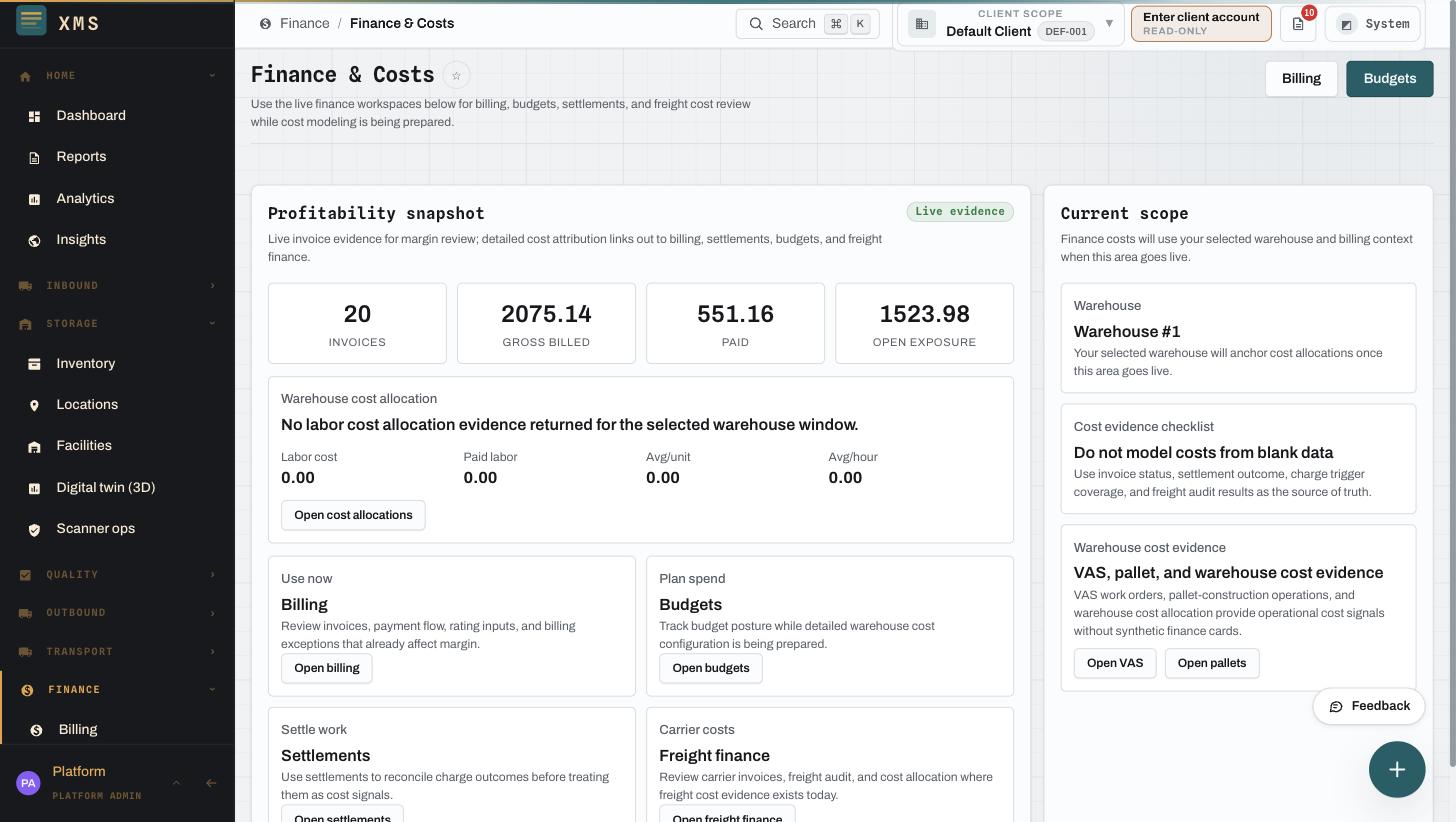
Turn usage and charge triggers into reviewable billing runs, invoices, settlements, and cost-to-serve views.
Portfolio control
Operations teams see the portfolio they are allowed to run. Client teams see their own inventory, plans, labels, returns, analytics, and funding.
What 3PL teams need
Different workflows, SLAs, channels, packaging, carrier accounts, and notifications without separate deployments.
Coordinate labour, docks, storage, equipment, and exceptions across clients while preserving ownership.
Connect handling and service activity to billing evidence, settlements, open exposure, and profitability.
Finance closes the loop
The same operational events that move stock and shipments can feed charge review, invoicing, dunning, settlement, and cost-to-serve analysis.
What makes the operating model defensible
A client filter on a dashboard is not enough. The operating boundary must survive direct identifiers, shared physical resources, month-end review, and an export request.
Application tenant context and database row-level policies constrain client-owned inventory, orders, plans, commerce, finance, and users.
Operators, robots, lanes, docks, bins, and work can share a reservation view while client ownership and each subsystem's authority remain explicit.
Billable usage retains source operation and review state; pricing, invoice, dispute, settlement, and margin do not depend on reconstructing scans later.
Contracted datasets export with entity and schema versions, row counts, file sizes, SHA-256 hashes, product version, and audited download.
Review one client flow
Map onboarding, execution, exception ownership, evidence, billing, and client visibility end to end.