Rate and source
Normalize demand, compare compliant rates, model accessorials, and select carrier or fleet capacity.
Transportation management system
For shippers, private fleets, and transport operators: connect demand, rates, routes, carriers, drivers, milestones, proof of delivery, freight finance, and claims without splitting planning from execution.
Transport lifecycle
Demand, handling units, legs, stops, movements, equipment, milestones, costs, and evidence stay correlated from request through commercial close.
Normalize demand, compare compliant rates, model accessorials, and select carrier or fleet capacity.
Consolidate loads, optimize stops, reserve capacity, tender, and retain responses and expiry.
Release tours, ingest positions and milestones, calculate confidence, and route exceptions.
Capture POD, audit invoices, settle carriers, pursue claims, and preserve customer evidence.
Dispatch command center
Supervisors move from network state to shipment, tour, vehicle, driver, and recovery action without losing SLA or tenant context.

Decision engines
Compare service, cost, capacity, account, accessorial, and operational constraints—not price alone.
Use real distance and time with multi-stop, capacity, service-window, and consolidation constraints.
Normalize multi-source events, assess confidence, identify the broken promise, and assign recovery work.
Route planning
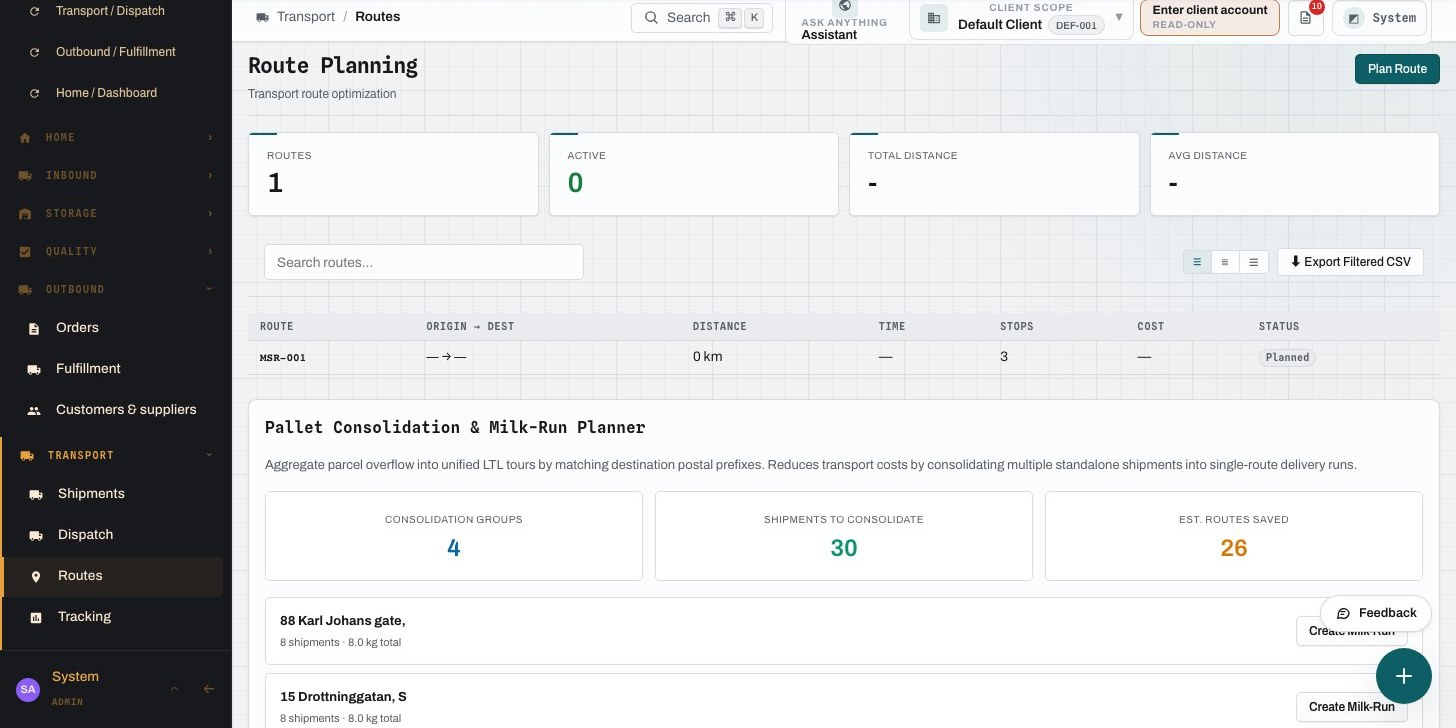
Static and dynamic planning share stops, handling units, equipment, driver, distance, duration, and cost with the downstream tour.
Carrier network
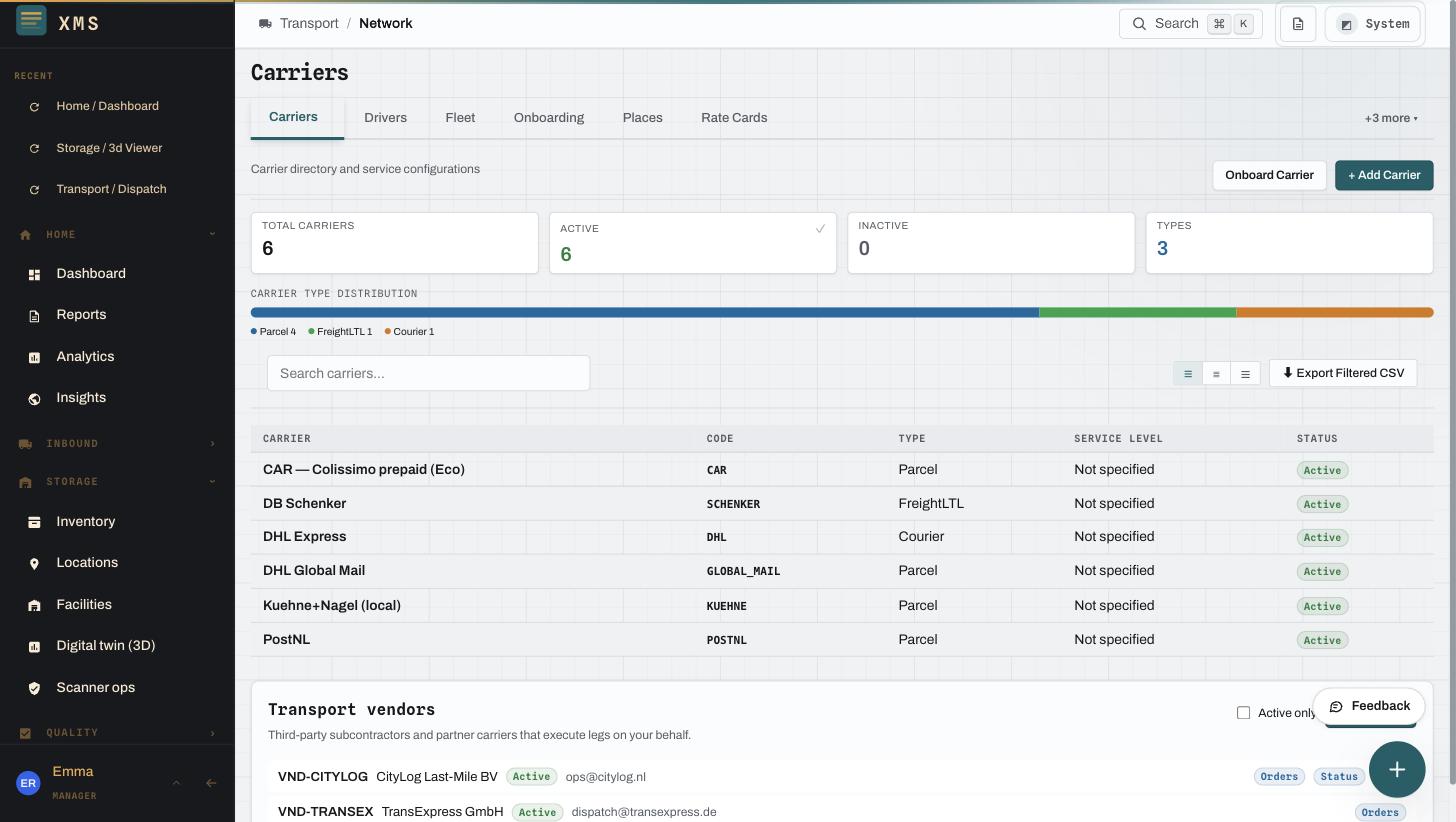
Carrier directory, services, account credentials, rate sources, labels, tracking, tenders, and performance feed the same shipment workflow.
Mechanisms beyond plan and track
A transport record is useful only when the executor, handoff, source event, charge provenance, and recovery action remain identifiable.
Each sequenced leg identifies partner fleet or external carrier, its transport order or carrier, status, and completed custody handoff.
Handling units, ordered legs, stops, modes, equipment, planned and actual times, evidence, and cost remain correlated.
Merchant quotes snapshot service, parcel facts, expiry, line-item sell price, tax, and signature without exposing carrier buy cost or margin.
Tracking exceptions, POD, invoice audit, claims, void evidence, provider refund, reconciliation credit, and settlement are not collapsed into one status.
Review one shipment
Map the decisions, integrations, exception ownership, evidence, and commercial recovery end to end.