Schedule
Coordinate purchase demand, ASN, dock appointment, vehicle, carrier, and receiving capacity.
Industrial and B2B logistics
Control warehouse and transport execution across industrial workflows: plan docks and handling units, inspect by lot, build delivery documents, consolidate less-than-truckload transport, and retain proof through settlement.
From supplier to consignee
B2B operations depend on the physical and commercial envelope around each line: pallet, lot, appointment, quality verdict, route, delivery note, proof, and charge.
Coordinate purchase demand, ASN, dock appointment, vehicle, carrier, and receiving capacity.
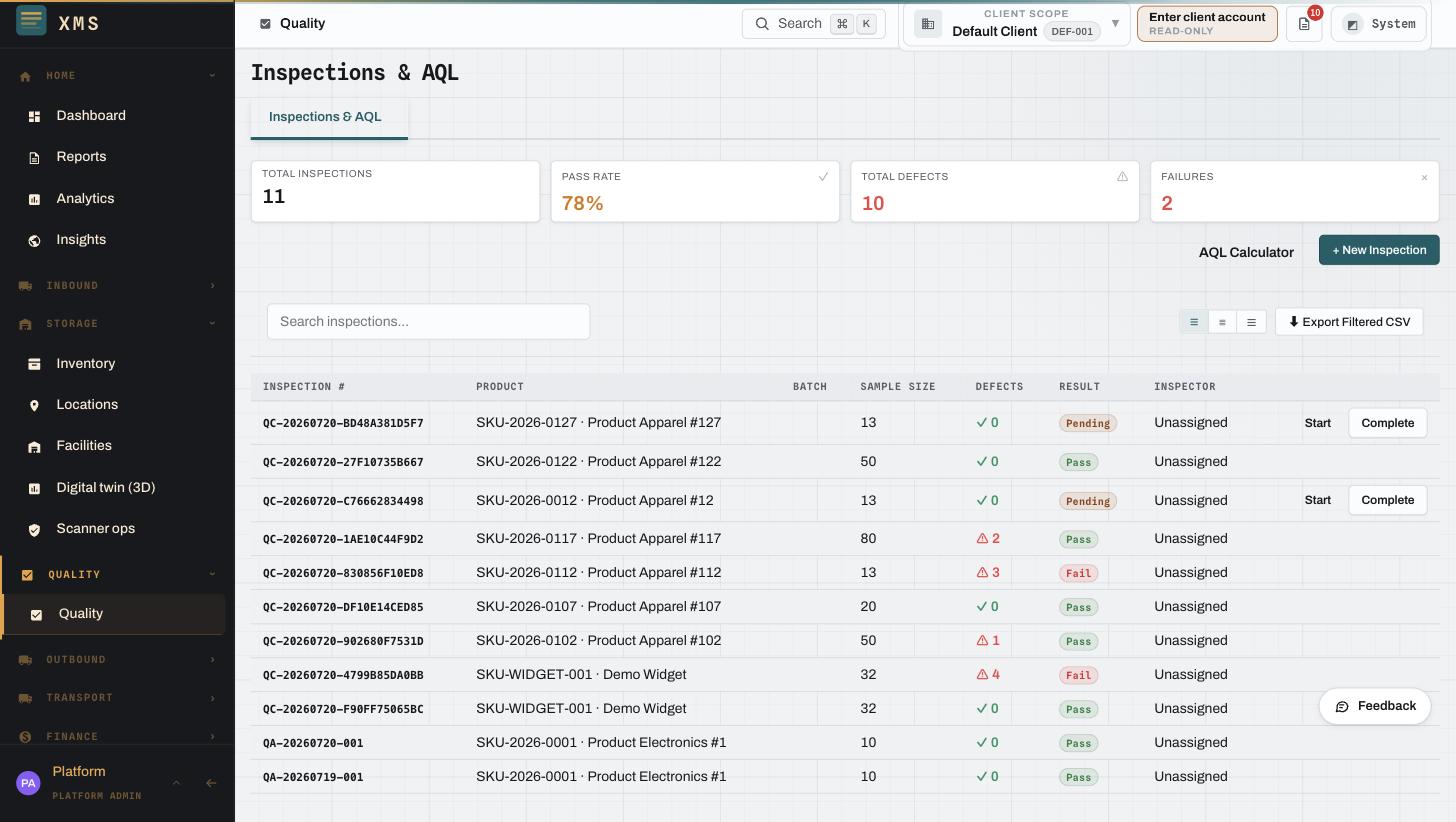
Sample by AQL plan, record defects, quarantine failures, and retain lot and serial traceability.
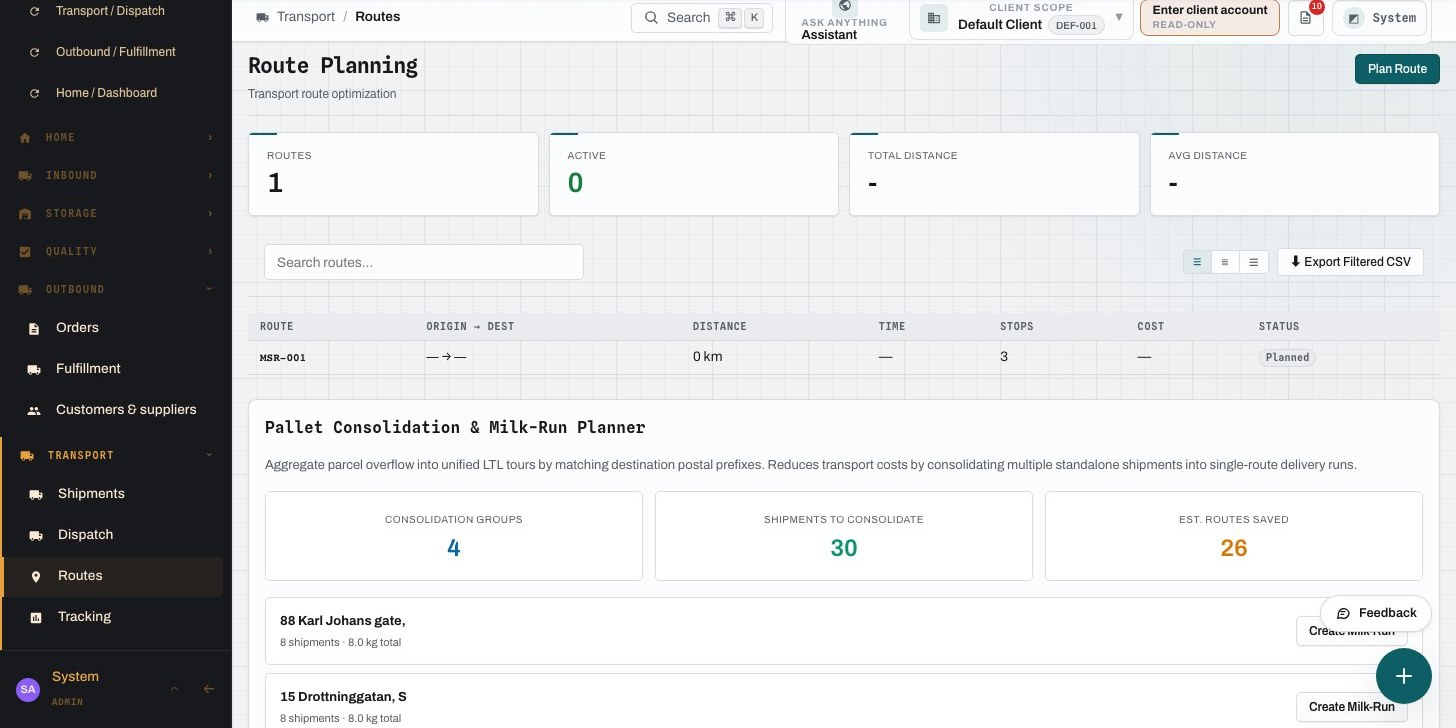
Build handling units, allocate stock, group store or customer demand, and plan LTL or milk-run movement.
Generate operational documents, capture POD and exceptions, audit freight, and close commercial evidence.
Quality by the numbers
Lot size, inspection level, AQL, sample size, defects, and accept/reject thresholds stay visible to the team making the release decision.
B2B execution depth
Receive, move, reserve, cross-dock, pick, load, and reconcile inventory at the unit the floor actually handles.
Keep delivery notes, shipping documents, labels, POD, signatures, and exception evidence tied to the shipment.
Connect warehousing activity, accessorials, freight invoices, budgets, and cost-to-serve without spreadsheet reconstruction.
Road-network planning
Build multi-stop routes with road-network distance and time, capacity, service windows, handling constraints, and cost breakdowns.
Traceability that changes a decision
The detail matters when a lot is transformed, mixed into a handling unit, sampled, held, counted, shipped, or recalled.
Transformation and manifest records preserve input lot, output lot, quantity, handling-unit, order, shipment, and event lineage.
Preview affected inventory, handling units, orders, shipments, and locations before committing a scoped recall hold and its evidence.
Compliance decisions retain signer, role, meaning, timestamp, record checksum, and business object instead of a free-text approval note.
Count schedules, variance, reason, root-cause classification, corrective action, and follow-up stay attached to the inventory event.
Review one B2B movement
Map receipt, inspection, storage, allocation, documentation, route, proof, and commercial close.